7. MANUFACTORIES, MACHINES AND SUSPENSION BRIDGES
From the end of the 1770s onwards, Rijeka started to awake. The town began to grow bigger and the manufactory production developed at a fast pace in the area of Brajda in the west and in the gorge of the river Rječina in the east. New production plants employing several dozens of workers were opened.
In addition to the domestic production of earthenware pottery, in Rijeka and in other Croatian towns imported, manufactured luxury goods started to be very popular. There was porcelain from the Vienna manufactories, English china and ceramics as well as the Sheffield silver-plate crockery. The first objects made of cast iron as well as the first lithographic brochures and catalogues announced the real beginning of industrialization.
There were not only plans to enlarge the harbour or even build a new one, but from the 1780s onwards the first machines for deepening the ground were designed. These machines, called dredgers, were all made by Trieste engineers and had a notice that they were produced for the ongoing works in the Rijeka harbour.
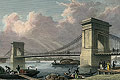
Machines were one of Adamić's greatest interests. In 1811 he bought a steam saw for sawing oak wood in England. He was also interested in dredgers, which he could use on his estate. As a project engineer he designed a chain bridge over Rječina (in 1823) and an iron bridge over the Danube, connecting Buda and Pest (in 1828). |