

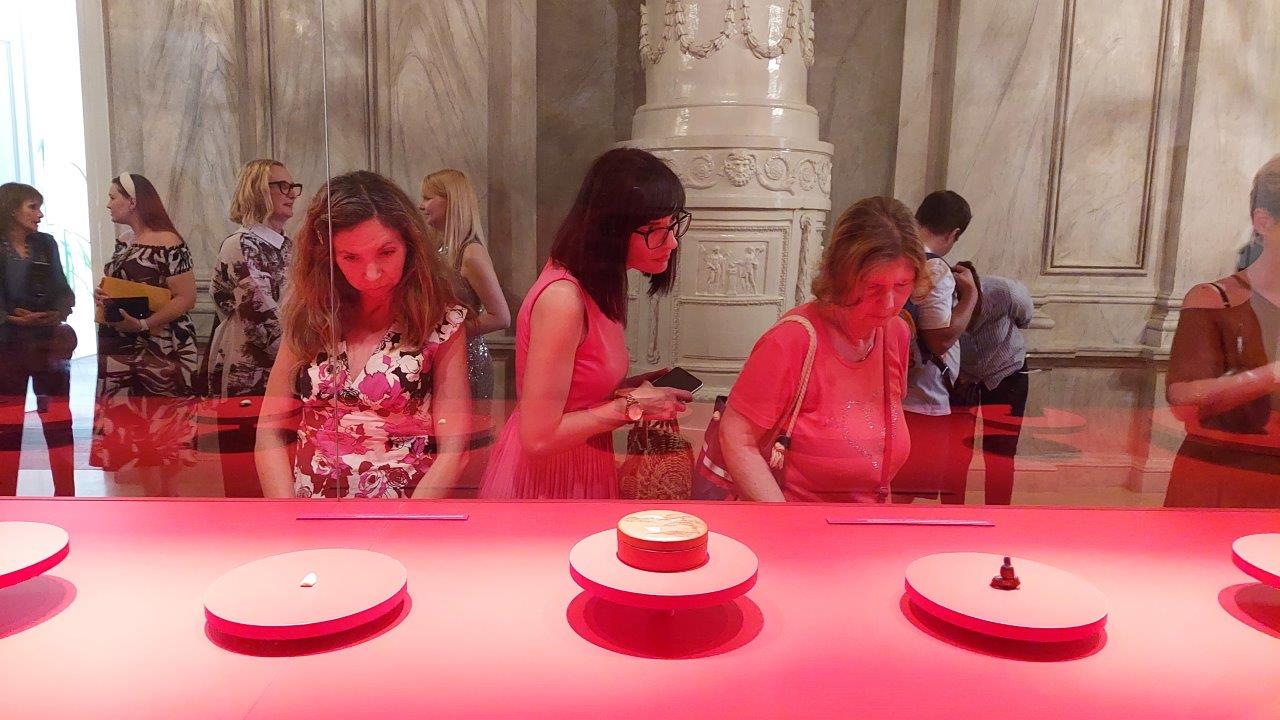
The exhibition Klimt and the Far East opened at the Sugar Refinery Palace on 20 June 2024, continuing a programme launched in 2021 with the exhibition The Unknown Klimt – Love, Death, Ecstasy, presented as part of the Rijeka – European Capital of Culture project. Klimt and the Far East is part of a series of periodic exhibitions brought together under the concept of the Unknown Klimt, exploring aspects of the artist’s work and life that have received less scholarly attention and remain less familiar to the wider public. The exhibition bears the subtitle The Unknown Klimt and the Influence of Far Eastern and African Art and presents visitors with a selection of objects from the artist’s personal collection originating from the Far East and Africa, today held by the Leopold Museum in Vienna. Klimt’s fascination with Chinese iconography, Japonism and African traditions of decorating utilitarian objects and textiles had a significant influence on his artistic career, including the creation of some of the best-known works of his Golden Phase. This is particularly evident in the influence of objects of African origin, which can be traced in his work until the end of his career. As the exhibition curator Deborah Pustišek Antić explained at the opening, the idea for the exhibition emerged during preparations for The Unknown Klimt, when she met Peter Zimpel, Klimt’s great-nephew, who had inherited part of the artist’s estate. Unfortunately, part of the collection was destroyed during the Second World War. Thirteen surviving objects from the collection assembled by the celebrated artist over the course of his life are now on display at the City Museum of Rijeka. Some of these objects can also be seen in photographs of the interior of Klimt’s studio, providing further confirmation of their provenance. The exhibition opening also featured Chinese musician Liu Sha, who performed two traditional Chinese compositions on the pipa, a traditional Chinese plucked string instrument.
The exhibition is on view from 20 June to 10 November 2024.

